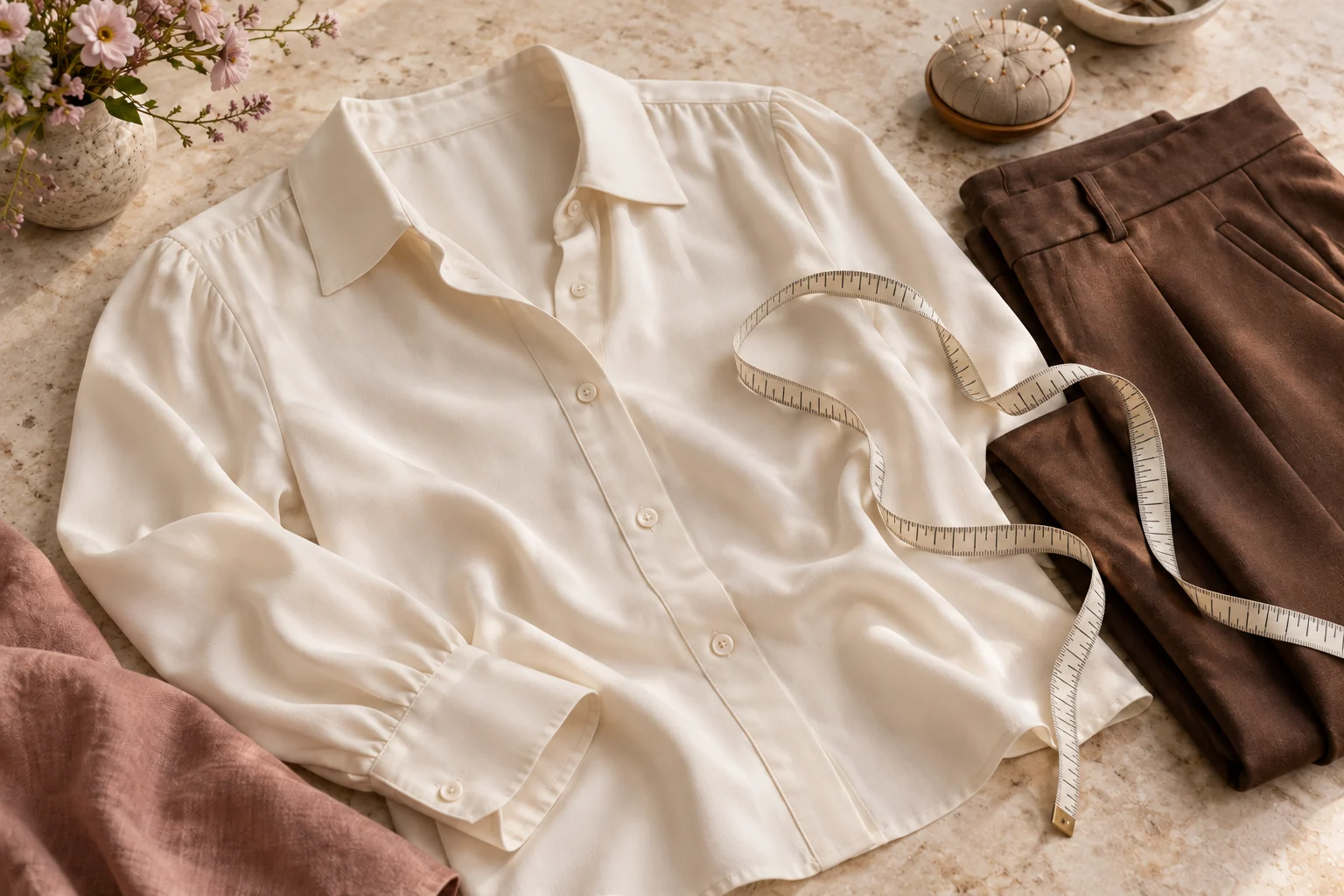
Before matching a number to S, M or L, check what the size chart measures. A body chart describes the person a size is intended to fit. A garment chart describes the clothing itself. Use your body measurements for the first; for the second, compare a similar piece you already like, measured by the same method.
If the page does not say which kind of chart it is, pause and ask. A heading such as “Bust” or “Product Measurements” without a measuring method may still leave an important question unanswered. A plausible-looking number is not proof that you have interpreted it correctly.
Read the Chart Before Taking Out the Tape
Look for three things together: what is being measured, the unit, and the measurement method. “Chest width” measured across a closed top is not the same as a full bust circumference. A garment length measured from the shoulder is not an inseam, and a waistband measured relaxed is not necessarily its stretched limit.
The distinction is not just terminology. UNIQLO’s measuring guidance separates body measurements from finished-product measurements and notes that the latter vary by design. Use the chart belonging to the exact item you are considering, not a remembered size from another piece.
When the Chart Measures Your Body
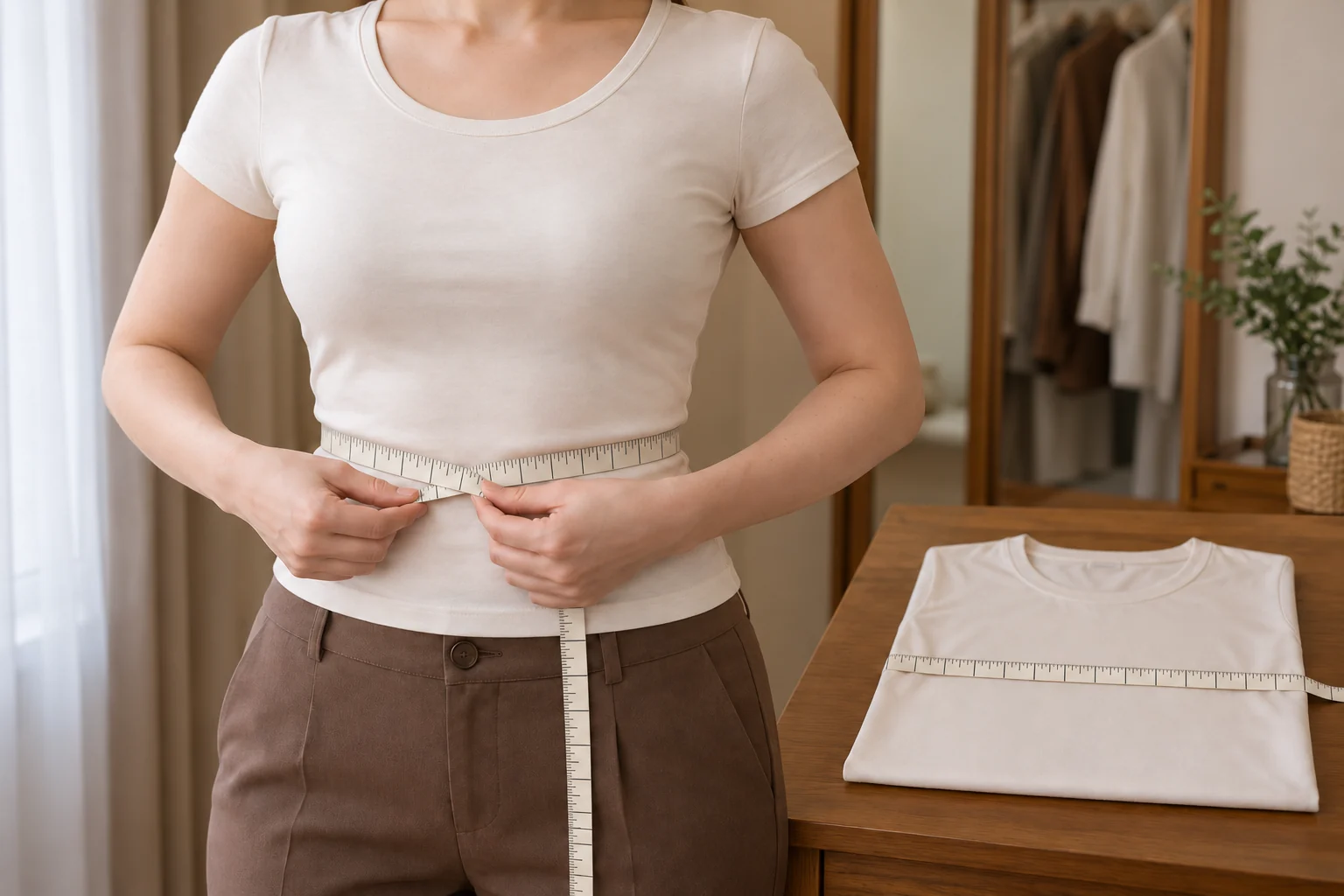
Use a flexible tape and follow the retailer’s stated measuring points. Keep it level around your body and comfortably close, without compressing yourself or holding your breath. For a standard bust, waist and hip record, measure around the fullest bust, your natural waist and the fullest hips. Simplicity’s measuring guide illustrates these landmarks; its sewing-pattern sizes are not a conversion chart for ready-made clothing.
Measure over the undergarments you expect to wear, or very light close-fitting clothing where appropriate. A bulky sweater is not a useful measuring layer. Write the units next to the numbers so a later comparison does not mix inches and centimeters.
Use all the relevant rows, not only the one that matches your usual label. If your bust, waist and hips point to different sizes, that is a reason to examine the garment’s cut and ask for advice, rather than average the size letters. A skirt and a button-front blouse do not have the same fitting priorities.
When the Chart Measures the Garment
Choose a comparison piece that serves the same purpose. A relaxed shirt is more informative for another relaxed shirt than a fitted stretch T-shirt. Close the fastenings, lay the piece flat without pulling it wider, and follow the seller’s measuring diagram. Match the position of each measurement as well as its units.
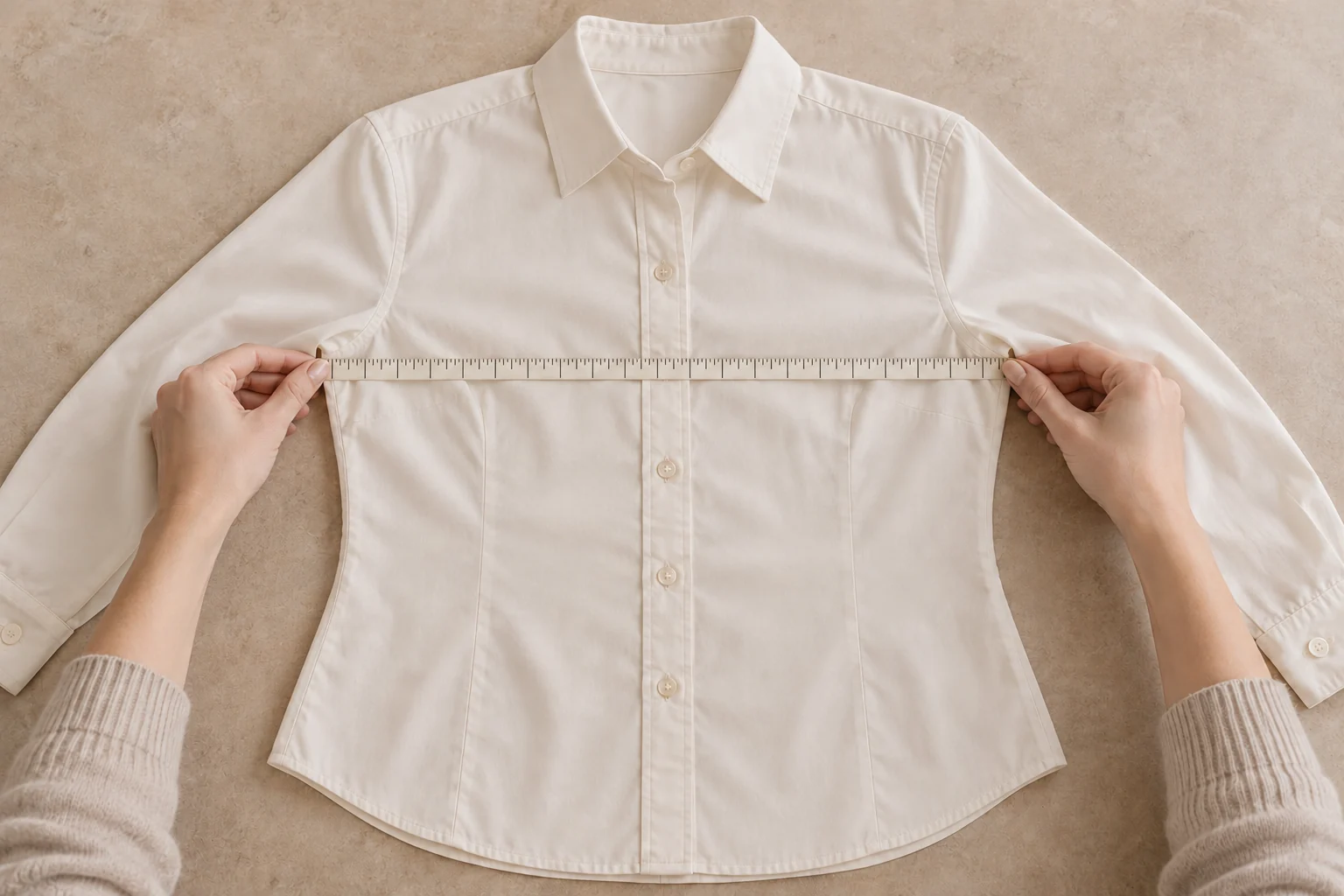
For a simple garment explicitly measured as flat underarm width, a width of 20 inches corresponds to approximately 40 inches around at that level. That is arithmetic, not a size recommendation. Do not double a value already given as circumference, or assume the same conversion works for every gathered, asymmetric or shaped garment. Garment Development’s measurement guide explains why method and construction matter.
Leave Room for the Intended Fit
The difference between body and finished-garment dimensions is often called ease. Some of it allows movement; some creates the silhouette. Certain stretch designs use negative ease, meaning the unstretched garment is smaller than the wearer’s corresponding measurement. That does not mean every item described as stretchy can be bought smaller. Tilly and the Buttons explains these distinctions in its pattern-fitting guide.
For shopping, the practical question is not “How much extra room should every top have?” It is “Does this piece provide the fit I want in the places that matter?” Check sleeves, shoulders and length as well as the headline bust or waist value. Sizing up changes more than one dimension, so it may solve a tight body but create sleeves or a hem you do not want.
For a concrete comparison, the Slim-Fit Button-Down Shirt is described as bodycon, while the Classic Button-Down Long Sleeve Shirt is described as a relaxed fit. Both pages label their tables as product measurements in inches. Do not expect the same size letter to produce the same shape; read each table independently, and ask about any measuring method that is not specified.
If the item will be worn over another layer, compare it with a garment you already wear that way. For lighter layers, our camisole and tank-top guide looks at straps, necklines and how pieces sit together.
What to Ask When the Chart Is Unclear
Send a focused question: “Are these body or finished-garment measurements? Is the bust a circumference or a flat width? Is the waist measured relaxed or stretched?” For a dress or jumpsuit, ask where length begins if that is not shown.
When comparing items in Wardrobe, reopen each product’s own measurements rather than transferring one chart across the collection. A missing dimension is a limit on what you can predict, not an invitation to fill it in from another style. The goal is a clear comparison before checkout, not a guaranteed fit based on one number.